Importance of Sports in School Education
posted on Sep 18, 2026
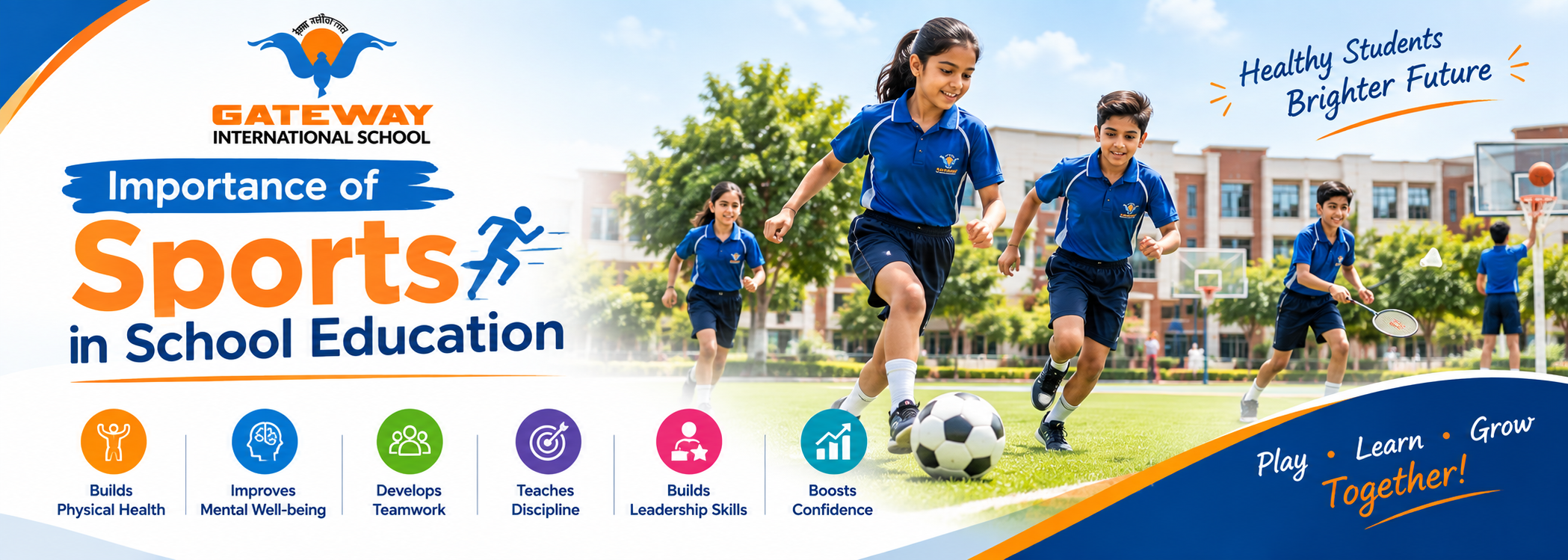
Education is not limited to textbooks, classrooms, and examinations. A well-rounded education also helps children develop physical fitness, confidence, discipline, teamwork, and emotional resilience. This is why Sports Education plays an important role in a student’s overall development.
Schools that combine academics with regular sports and physical activities provide students with opportunities to learn valuable life skills beyond the classroom. At Gateway International School Sonipat, sports and physical activities can be an important part of creating a balanced and engaging school experience for students.
Why Is Sports Education Important in Schools?
Sports Education encourages children to stay physically active while developing important social and personal skills. Regular participation in sports can help students understand the importance of discipline, teamwork, perseverance, and goal-setting.
Here are some of the key benefits of including sports in school education.
1. Promotes Physical Fitness
One of the most obvious benefits of sports is improved physical health. Running, jumping, playing team games, and participating in other physical activities help children develop strength, stamina, flexibility, balance, and coordination.
Regular physical activity can also encourage children to develop healthy habits that can continue into adulthood. Schools therefore have an important role in providing students with opportunities to stay active throughout their school years.
2. Develops Discipline and Time Management
Sports require students to follow rules, attend practice sessions, and work consistently toward improvement. These experiences can help children understand the value of discipline.
Students who balance academics, sports, homework, and other activities also get opportunities to develop time-management skills. These habits can be useful both inside and outside the classroom.
3. Builds Teamwork and Cooperation
Many sports require players to work together toward a common objective. Students learn how to communicate, share responsibilities, respect their teammates, and cooperate with others.
These experiences can help children develop interpersonal skills that are valuable in school, higher education, and future professional environments.
4. Improves Confidence and Self-Esteem
Participating in sports gives students opportunities to set goals, overcome challenges, and recognize their own progress.
Whether a student learns a new skill, improves their performance, or contributes to a team, these experiences can help build confidence. Sports can also teach students that improvement often comes through practice and persistence.
5. Teaches the Value of Perseverance
Success in sports rarely happens immediately. Students may need to practice repeatedly before mastering a particular skill or improving their performance.
This teaches an important lesson: setbacks are part of the learning process. Sports Education can therefore help students develop perseverance and a growth-oriented approach to challenges.
6. Encourages Leadership Skills
Sports provide students with different opportunities to demonstrate leadership. Captaining a team, supporting teammates, organizing activities, or taking responsibility during competitions can help students develop leadership qualities.
These experiences can encourage children to become more responsible and confident when working with others.
7. Supports Social and Emotional Development
School sports provide an environment where students can interact with classmates, make friends, and learn how to manage different situations.
Winning and losing can also teach children how to handle success and disappointment constructively. Learning to respect opponents, follow rules, and accept results can contribute to emotional and social development.
8. Helps Create a Balanced Education
Academic learning is essential, but students also need opportunities to develop physically, socially, and emotionally. Sports can complement classroom learning by providing a different environment for exploration and skill development.
A balanced approach to education allows students to discover their interests and strengths while developing a broader range of abilities.
Sports Education at Gateway International School Sonipat
A school’s approach to sports can contribute significantly to students’ overall educational experience. At Gateway International School Sonipat, integrating sports and physical activities with academics can provide students with opportunities to develop fitness, teamwork, discipline, confidence, and other important life skills.
For parents looking for a school that values holistic development, considering opportunities for both academic and extracurricular learning can be an important part of the school-selection process.
How Parents Can Encourage Sports Participation
Parents can support their children’s interest in sports by encouraging regular physical activity and allowing them to explore different games and activities.
Simple steps can include:
-
Encouraging children to spend time outdoors.
-
Supporting participation in school sports and activities.
-
Helping children maintain a healthy balance between studies and physical activity.
-
Appreciating effort and improvement rather than focusing only on winning.
-
Allowing children to explore sports that match their interests.
Conclusion
Sports Education is an important part of holistic school education. From physical fitness and teamwork to discipline, confidence, leadership, and perseverance, sports can give students valuable experiences that complement their academic learning.
Schools such as Gateway International School Sonipat can help create an environment where students have opportunities to develop academically while also growing physically, socially, and personally.
A strong educational journey is not only about preparing students for examinations—it is also about preparing them for life. Sports can be an important part of that journey.